In this guide
Choose the work question first
A course or workshop is more useful when it answers a specific development question. Start with a task you are authorized to perform and identify what would make the next attempt clearer, more accurate or easier to review. Syracuse's public learning pages show several categories of development opportunities. They do not guarantee a seat, approval, funding or a career outcome for every reader.
This article offers an original way to connect learning with practice. It is not the university's development plan or performance rubric. A workshop description should be checked for its current audience, date, cost and participation conditions before a reader makes arrangements.
Use learn–try–review
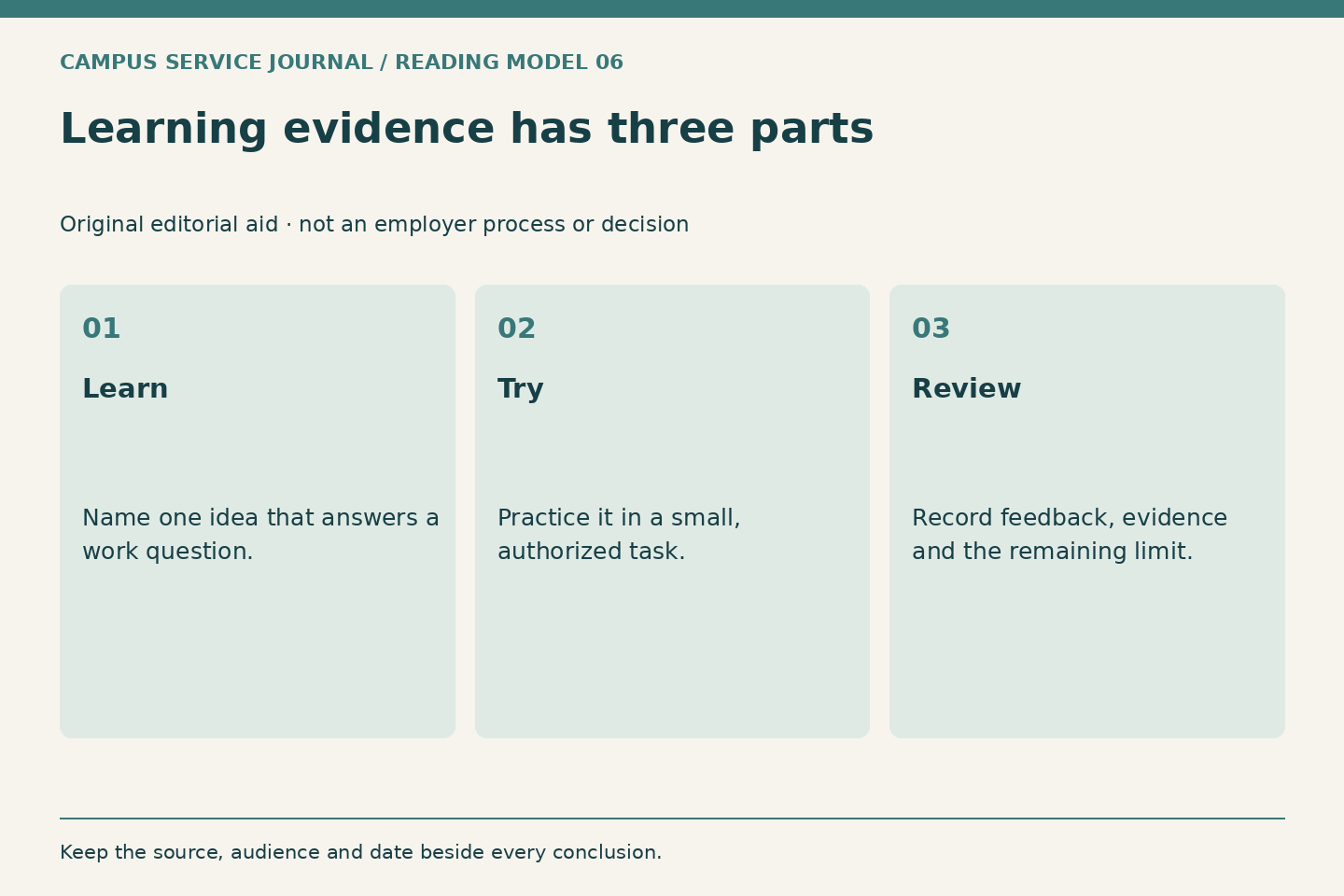
The three-part note records one idea learned, one appropriate attempt to apply it and one piece of feedback or evidence. Keep the attempt small enough to observe. “Improve communication” is broad; “revise an approved instruction so its next action is clear” is more testable. The aim is a useful change, not a large claim.
In a hypothetical exercise using a public event notice, a learner replaces a confusing paragraph with a clear sequence and asks an authorized reviewer whether the intended action is understandable. The result is evidence about that communication task. It does not certify expertise, establish accessibility compliance or prove readiness for a higher-level position.
Distinguish participation from application
Attendance establishes participation. A completed exercise may show practice. Consistent competent work requires its own evidence and, where applicable, formal assessment or authorization. Keep those labels honest in career materials. A certificate title should not be expanded into a qualification the issuing program does not provide.
If a learning activity touches confidential work, use an approved sample or a safe original demonstration. Do not upload institutional records to an outside tool merely to complete a practice exercise. Current employer rules and permission govern the material and tools used, even when the learning goal is ordinary.
Make the next step proportionate
Review whether the new idea helped and what remains uncertain. You may need more practice, clearer feedback or a different learning resource. A useful note can end with “not yet demonstrated.” That is better than treating a single successful attempt as proof that every related task is mastered.
The output is a small evidence trail linking learning to work. It can support a development conversation or help choose the next activity, but it does not determine performance or promotion. The habit is simple: name the question, practice within scope and keep the evidence of what changed.
Continue reading: Faculty and staff pages answer different questions, Build a first-term map of responsibilities, MySlice at Syracuse: a shared doorway, distinct services.